
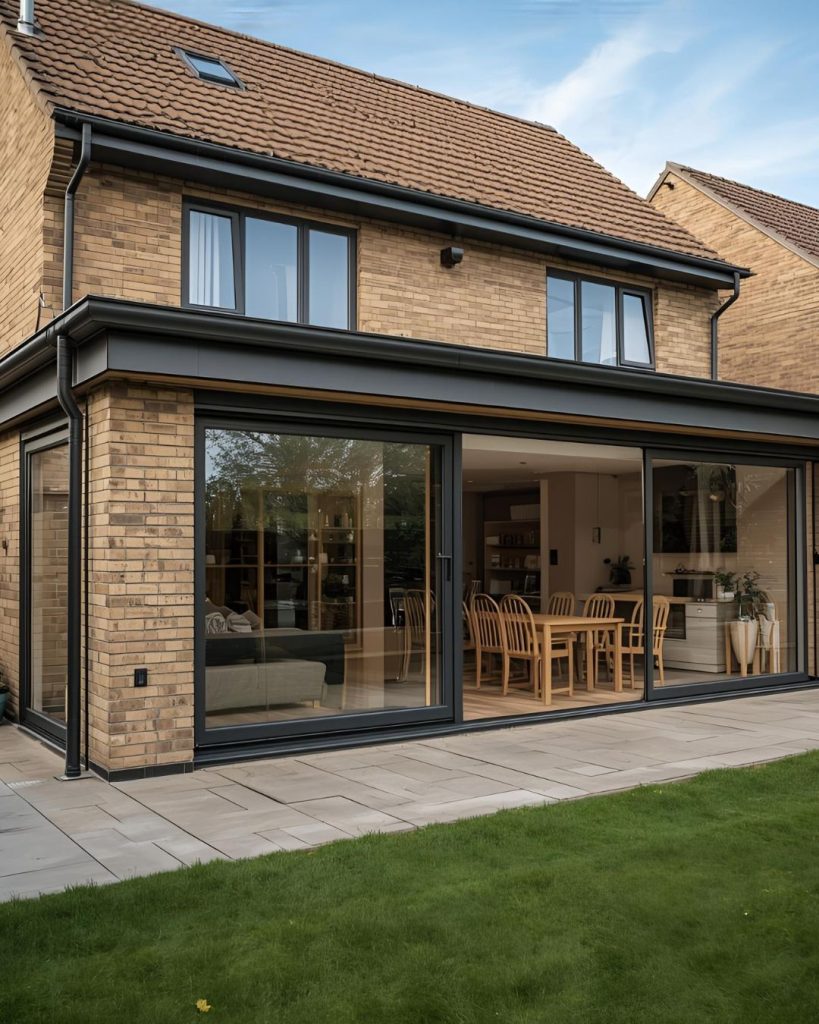
How Much Does a House Extension Cost in Banbury?
If you’re thinking about extending your Banbury home, cost is almost certainly one of the first things on your mind. Extensions vary enormously in price — a compact single-storey kitchen extension is a very different project to a large two-storey addition — and the figures you’ll find online often reflect London or Southeast pricing, which doesn’t translate to North Oxfordshire.
This guide gives you realistic cost ranges for house extensions in Banbury, based on work carried out in the area. It covers what drives costs up or down, what the planning and building regulations process looks like, and what you should expect from the build itself.
What Affects the Cost of a House Extension in Banbury?
Several factors influence what you’ll pay for an extension:
Size is the most obvious — a larger extension costs more to build. But size isn’t always the biggest variable. The specification matters just as much. An extension with bi-fold doors, underfloor heating, and a vaulted ceiling costs considerably more per square metre than a basic brick-and-tile addition with a standard door and window.
The ground conditions on your plot make a difference too. Banbury’s soils are predominantly clay — Lias clay in parts of the town, Oxford clay in others. Clay soils expand and contract with moisture, and this movement can cause problems for shallow foundations. Where there’s any uncertainty about ground conditions, we carry out a soil investigation before designing the foundation. That adds a small cost upfront but prevents much larger problems later.
Your property type plays a role. A Victorian terrace in Grimsbury with a narrow rear plot presents different constraints to a 1970s detached in Hardwick with a generous garden. Some older properties have limited access for groundworks plant, which affects how work is sequenced and priced.
Finally, the finish level you’re after — from a practical, plainly decorated space through to a high-spec contemporary interior — will push costs in one direction or the other.
Single-Storey Rear Extension Costs in Banbury
A single-storey rear extension is the most common type of extension in Banbury. It’s typically used to enlarge a kitchen, create a kitchen-diner, or add a ground-floor family room.
For Banbury and the North Oxfordshire area in 2025, realistic cost ranges are:
Basic single-storey rear extension (up to 15m²): £25,000–£35,000. This covers groundworks, blockwork walls, a pitched or flat roof, a window, external door, plasterwork, and basic decoration. No high-spec finishes.
Mid-range single-storey extension (15–25m²): £35,000–£55,000. More floor area, a better specification — potentially bi-fold doors onto the garden, a better quality floor finish, and LED lighting throughout.
Larger or high-spec single-storey extension (25m²+): £55,000–£80,000. A larger footprint, possibly with roof lanterns, underfloor heating, and premium materials throughout.
These figures include VAT and all trades. They don’t include kitchen units, appliances, or furniture — those are separate costs.
Double-Storey Extension Costs in Banbury
A double-storey extension adds space on both floors — a ground-floor room and a bedroom or bathroom above. It costs more than a single-storey build but less per square metre, because the foundation and roof are shared across two floors.
For Banbury in 2025:
Standard double-storey extension (up to 25m² per floor): £40,000–£65,000. A solid build with standard specification — new rooms on both floors, plastered and decorated, with electrics and plumbing as required.
Mid to high specification double-storey (25–40m² per floor): £65,000–£90,000. Larger footprint, better materials, and potentially a master suite upstairs with an en-suite bathroom.
Note that double-storey rear extensions typically require planning permission from Cherwell District Council, as they exceed permitted development limits. Budget two to three months for the planning process if that applies to your project.
Side Extension and Wraparound Extension Costs
Side returns — filling in the gap between the house and the side boundary — are common in terrace and semi-detached properties. They’re a practical way to widen a kitchen or hallway.
A basic side return extension in Banbury (typically quite narrow in older properties) might start from around £20,000. A full wraparound extension combining a rear and side addition is a more substantial project and typically runs from £50,000 to £80,000+, depending on size and specification.
Side extensions in Banbury often abut a shared boundary with a neighbour, which means Party Wall Act notices are usually required. This adds a small administrative step but isn’t onerous in most cases.
Planning Permission for Extensions in Banbury
Whether your extension needs planning permission depends on its size, location, and your property type.
Many single-storey rear extensions fall within permitted development rights. For detached houses, a single-storey rear extension can extend up to eight metres behind the original rear wall without planning permission, provided it doesn’t exceed four metres in height and certain other conditions are met. For semi-detached and terrace properties, the limit is six metres.
Banbury has a conservation area centred on Grimsbury and parts of the town centre. If your property is in or adjacent to a conservation area, permitted development rights may be more restricted. Some properties across the town also have had their permitted development rights removed by an Article 4 Direction.
Cherwell District Council is the planning authority for Banbury. If your project needs a full planning application, the process typically takes eight to ten weeks from submission, assuming there are no significant objections.
We check the planning position for every project we take on before any work begins.
Building Regulations and Sign-Off
All house extensions require building regulations approval, regardless of whether planning permission is needed. Building regs cover structural calculations, thermal insulation, drainage, fire safety, and ventilation.
There are two routes: a full plans application (where drawings are submitted and approved before work starts) or a building notice (where the inspector visits during the build). We typically use the full plans route — it takes slightly longer upfront but means the design is agreed before groundworks begin, reducing the chance of issues on site.
The building inspector visits at key stages: after the foundation is excavated, after the damp-proof course is laid, when the roof structure is complete, and at first fix and final stages. The completion certificate issued at the end is an important document — it confirms the build met building regulations standards and you’ll need it if you sell the property.
Typical Extension Timeline in Banbury
Once planning (if needed) is in place:
Single-storey extension: Ten to fourteen weeks on site from groundworks start to practical completion.
Double-storey extension: Sixteen to twenty-four weeks on site depending on size and specification.
These figures assume no significant delays — weather, unexpected ground conditions, or material supply issues can push timelines out. We build a realistic programme at the start of every project and update it if anything changes.
What’s Included in an Extension Quote?
A properly presented quote from a Banbury builder should break down the work by trade and scope. At a minimum, expect to see:
Groundworks and foundations. Brickwork and blockwork. Roof structure and covering. External windows and doors. Plasterwork (internal walls and ceiling). Electrical first and second fix. Any plumbing required. Screed or floor build-up. Decoration.
Anything not in the quote — kitchen units, flooring materials, fitted furniture — should be clearly noted as excluded. Don’t assume they’re included if they’re not listed.
We provide fully itemised quotes for every project. If something is uncertain at the quote stage (for example, ground conditions that need investigating), we’ll note it and give you a provisional allowance with an explanation.
Getting Started
If you’re considering a house extension at your Banbury property, the most useful next step is a site visit. We’ll come out, look at your property, talk through what you’re thinking, and give you a realistic view of what’s feasible and what it’s likely to cost.
There’s no charge for the visit and no obligation to proceed. Get in touch through the contact page or give us a call to arrange a time.